




Executive summary
A recent study found that 37% of consumers now use AI instead of Google for searches. More than half said AI gives clearer answers than traditional search engines, with fewer ads and sponsored links.
But if more people are asking ChatGPT, Gemini, and other AI assistants to search for products and services, how can a business know if it’s appearing in those results?
That’s the question that started Trendos.
The Tesonet Group saw an opportunity to create a product built specifically for AI visibility, offering users a single place to monitor rankings, mentions, and positions against competitors across a wide range of large language models (LLMs).
The catch was time. Trendos had just three months to launch its first product. And since the company was still forming its internal team, they needed extra expertise to meet the deadline.
Helmes came recommended by another Tesonet Group company and quickly took on much of the early development. A four-person team started the project, and the first version launched within the quarter.
Meet the customer
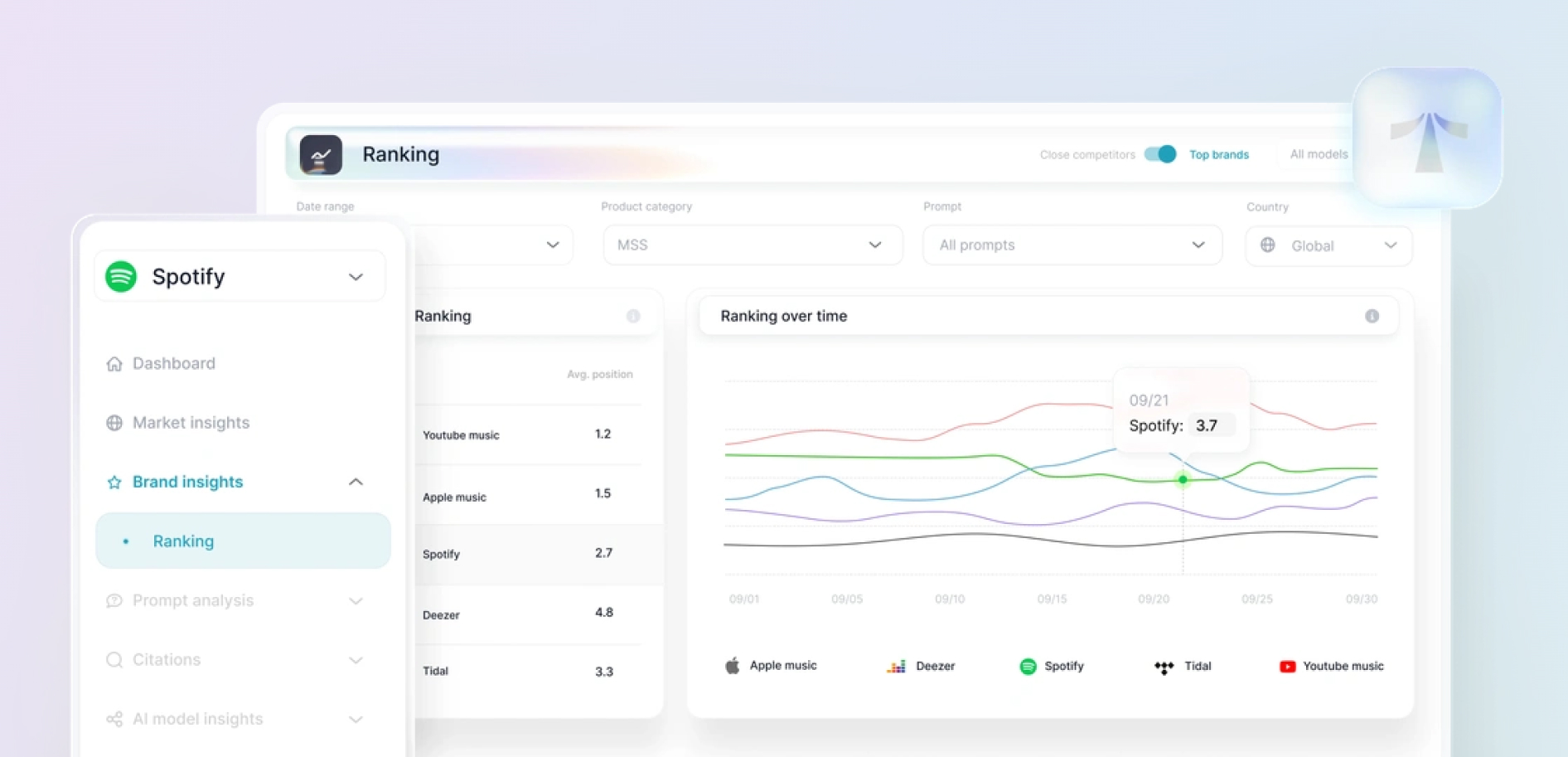
Trendos is a Lithuania-based technology company specializing in Generative Engine Optimization (GEO) and brand intelligence. Founded in Vilnius and launched publicly in 2026, the platform helps marketing teams, SEO specialists, and agencies understand and monitor their presence across AI-powered search.
Backed by global technology builder and investor Tesonet, Trendos operates independently and has built a growing dataset covering more than 2 million AI-generated answers and over 400,000 cited sources across seven AI engines.
The data is updated daily, supported by a citation engine capable of processing more than 300,000 citations a day, while also handling scraping, anti-bot detection, and consent requirements.
The challenge
For years, companies of all sizes measured their success largely by their visibility in traditional search engines. For many search engine optimization (SEO) specialists, getting on the first page of Google search results was a top priority.
AI is changing that.
Instead of searching through pages of results and sponsored ads, more and more people are asking AI. And while many still double-check those answers elsewhere, companies not included in those recommendations could miss out on reaching new customers.
Helmes and Trendos needed to overcome several challenges before they could fill that gap in the market:
- Millions of requests – Trendos needed to collect and process an enormous amount of data from multiple AI platforms without overwhelming the system.
- Inconsistent AI responses – Different platforms can describe the same brand in different ways, making it difficult to accurately identify and compare companies.
- Users expect near-instant responses – The team had to find a way to turn large amounts of complicated data into accessible information without a long wait time for users.
- A tight deadline – Helmes had just three months to develop a working platform.
The Helmes approach
When Helmes joined, Trendos already had an initial database and an internal data annotation tool. What was missing was the commercial product itself and the development expertise needed to get it to market.
Flexibility at the core
Helmes began with four developers covering frontend, backend, data, and AI engineering. The team worked directly with Trendos’ developers, reviewing technical decisions together and regularly demonstrating new features as the product took shape.
But because Trendos is part of a relatively new market, not every requirement or solution was clear from the beginning.
For example, as new AI services and integrations became available, the team had to reassess priorities, test different approaches, and adjust the development work without losing sight of the launch deadline.
Making sense of millions of AI answers
One of the biggest challenges was collecting information from multiple AI platforms and making sense of it all. The team needed to gather AI-generated answers and the sources they cited, categorize information such as domains and source types, and handle huge amounts of data.
This also involved developing what the team describes as a first-of-its-kind approach to scraping ChatGPT and similar AI systems.
With millions of requests to handle, Helmes had to tackle several technical challenges:
- Managing heavy workloads
- Handling anti-bot detection
- Reducing network traffic from several terabytes to around 400 GB.
Another challenge was ensuring the information could be displayed and compared accurately.
For example, different AI tools can sometimes refer to a company or brand by several names or abbreviations. Without a way to recognize those variations, one company could show up multiple times in the results.
The opposite was also a problem. Two unrelated businesses may have similar names and therefore appear as one.
Helmes developed methods to identify and group related references and to distinguish between companies with similar names. This lets Trendos organize specific brand information more accurately.
Getting the product ready for customers
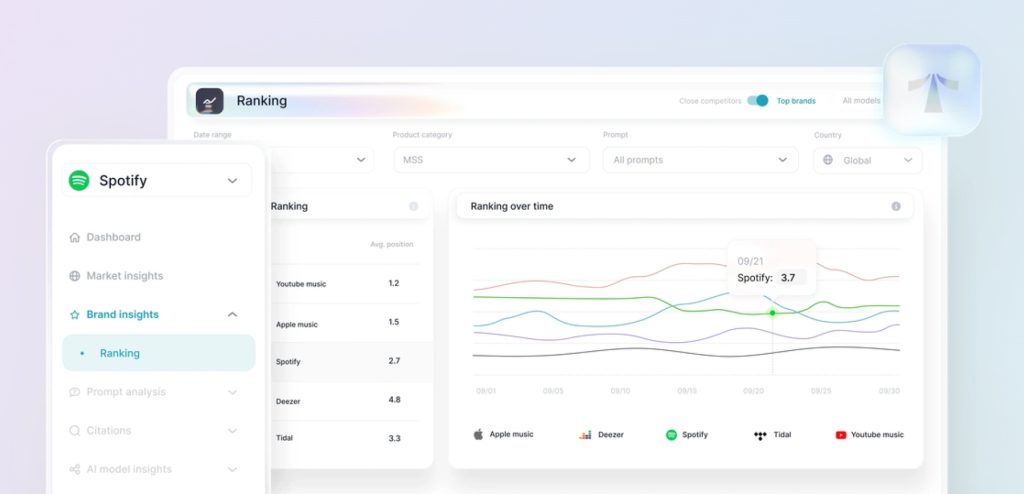
Alongside data collection, Helmes also developed the system behind the customer-facing dashboard.
Instead of processing millions of records every time a user requests information, the platform uses data it has already collected to deliver the results more quickly.
Helmes also helped build the dashboard itself, working from existing designs and established technologies. By not developing everything from scratch, the team could speed up delivery.
Results & benefits
The most important result wasn’t a technical benchmark. It was getting a new commercial product into the market while the opportunity was still fresh.
- Approximately three months from the start of the collaboration to market launch. Work began around December 2025, with the public launch taking place at the end of March 2026.
- More than 2 million AI-related requests processed per day, demonstrating the platform’s ability to continuously collect and analyze information across multiple AI platforms.
- More than 3 million brand-related records processed, supporting the identification and organization of different brand references for more consistent comparisons.
- Continued product development after the initial launch. Trendos has expanded its internal team, and Helmes remains involved, supporting the current platform and future capabilities.
A closer look at the platform
Technologies
The technology stack was selected primarily around two requirements: moving quickly and handling a rapidly growing volume of AI-generated data.
Key technologies used across the product include:
- Next.js
- Material UI
- PHP/Symfony
- Go
- Python
- Kafka
- Kubernetes
- Redis
- LiteLLM
- Playwright/Patchright
- GitLab
- Grafana
- Prometheus
- RabbitMQ
Future outlook
The launch was only the beginning for Trendos. It secured its first paying customer shortly after going live and soon began expanding its internal team and product capabilities. The platform has since grown to include partner and affiliate programs, as well as new ways for customers to connect Trendos with their own AI tools.
The collaboration with Helmes has continued, with the team providing ongoing engineering support as Trendos continues to scale.
Helmes joined us at an early stage of our project, and their engineers quickly became an integral part of our team. We really value their ability to work independently, take full ownership, and deliver solutions all the way through to production without needing much oversight. Their technical expertise, reliability, and commitment are a very important contribution to our progress at Trendos.
Algirdas Simutis – Engineering Manager, Vitalij Suckel – CTO
For other businesses, there’s a useful lesson in how the project came together. It shows that you don’t need a dedicated internal team to bring new digital products to market.
Trendos had the business idea, a deadline, and some of the foundations already in place. Helmes brought years of experience, up-to-date AI expertise, and the flexibility to adapt as the technology evolved. Working closely with Trendos, the team helped turn those foundations into something customers could use.
Not every product can be built in three months, but this project shows what an experienced team can achieve when the right expertise is available at the right time.
Let’s talk.
Get in touch
